close
The Facebook app is used in many cases, the most common use case is Facebook login integration on the website. In this tutorial, we’ll provide a step-by-step guide to create Facebook app and generate keys. You need to register as a Facebook developer and create an app to use the Facebook authentication service in the web application. In the developer panel, you can create Facebook app and generate App ID & App secret, which are used in Facebook SDK and API integration for authenticating your web application with Facebook.
The following app creation flow helps to create a Facebook app and get the App ID & Secret key on FB developer panel.
Before you start register as a Meta developer and be logged into your Facebook developer account.


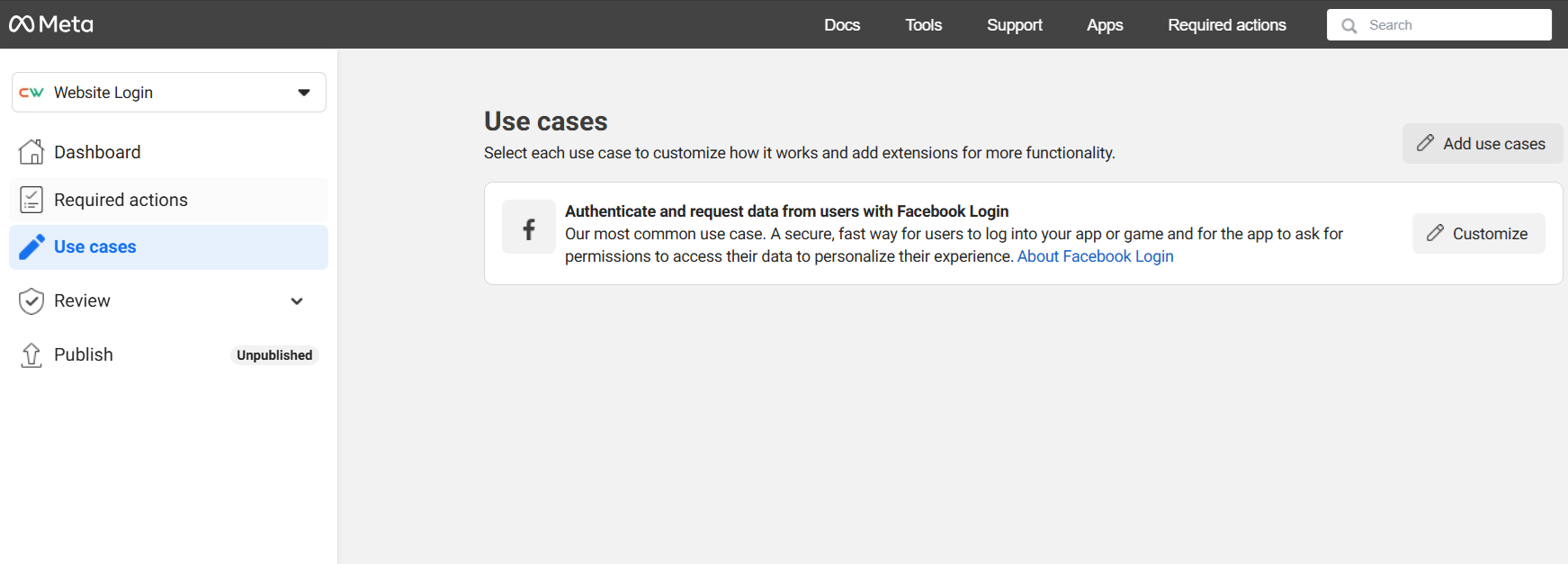


After completing the testing process, you need to publish the app for production use.

Once the App Review process is completed and approved by Facebook, your app will be published, and Facebook Login integration can be accessed by the Live Facebook users.
You only need the App ID and App Secret to integrate Facebook Login in the web application. Check the following tutorials where we’ve used the App ID and App Secret for accessing Facebook APIs (OAuth API, Graph API, etc.).
Looking for expert assistance to implement or extend this script’s functionality? Submit a Service Request
💰 Budget-friendly • 🌍 Global clients • 🚀 Production-ready solutions


What if I am building and iOS app and it does not have a URL to add as mentioned in step 3? TIA
Hi. I’m making one app, where i use the permission link_user, but i can capture of some accounts , but others i can’t capture , do you have idea about it ????
thanks!
it was pretty easy… and yes now i have got my fb app…
Hello!
I was wondering if there’s a way to link the facebook app to a specific Facebook page. I need it to pull in the social media feed of a page that I’m an admin of, but I can only get it to pull in my personal sites posts.
Easily understood !!
Thanks for the reply sir i got it, is it possible to store the Password of an account Registering from social network login in the user table.How we will identify the user who will login again through Social login,What will be the process for that ???
Sir i have an query that we are registering a user with a normal form filling process and other one is through Facebook. If we need to store the data of that Facebook user, how will we do that. Is it stored in the same table, in which a user forms the fill and its entry goes into the table OR we have to design a separate table for those users who have registered through Facebook/Google +.
Kindly revert me asap
@Robin You should maintain one table for all users. Add a column in
userstable nameduser_typeand insert a type based on different registration process (user_typecolumn value would befacebook,google,website, etc.).